 Bible Synapse
Geshem bowl
Object · c. 410 BC · Persian period · also called Qaynu bowl, Tell el-Maskhuta silver bowl, Inscribed phiale
See it on the map and timeline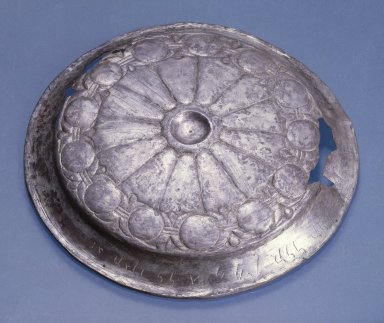
- Date
- c. 410 BC (the bowl and its inscription)
- Found
- Tell el-Maskhuta, Wadi Tumilat, Egypt, 1954. One of four inscribed silver bowls said to come from a shrine of a North Arabian goddess at Tell el-Maskhuta in the eastern Nile Delta. The Brooklyn Museum bought three of them, this one included, in 1954 through its Charles Edwin Wilbour Fund, and the fourth in 1957.
- Now
- Brooklyn Museum, New York (54.50.34)
- Passages
- Nehemiah 2:19, Nehemiah 6:1–6
What it is
A shallow silver offering bowl about 16 cm across. Its one-line Aramaic inscription reads ‘what Qaynu son of Geshem, king of Qedar, offered to Han-Ilat’, a North Arabian goddess.
How it connects to the Bible
Nehemiah’s third opponent, alongside Sanballat and Tobiah, is “Geshem the Arabian” (Nehemiah 2:19; 6:1), called Gashmu in 6:6. The bowl, from the late 5th century BC, names Qaynu son of Geshem as king of Qedar, the leading Arab kingdom of the time. Nehemiah’s Geshem is generally identified with Qaynu’s father, which would make him a powerful Arab ruler, probably himself king of Qedar.
What scholars debate
A Gashm son of Shahr is also named in an inscription from Dedan in north-west Arabia. Some scholars take him to be the same man, others a second candidate, so the identification is likely but not certain.