 Bible Synapse
Widow's mite (lepton)
Coin · 103–76 BC · Time of Jesus · also called Widow's mite, Lepton, Prutah
See it on the map and timeline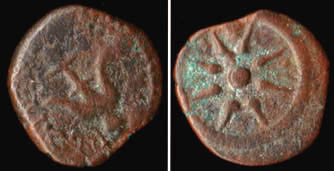
- Date
- 103–76 BC (the coin shown (reign of Alexander Jannaeus))
- Found
- Struck at Jerusalem (a coin type known from many examples). Small bronze coins of this kind were struck by the Hasmonean kings, by Herod and his sons, and by the Roman governors of Judaea.
- Now
- Many collections (a coin type)
- Passages
- Mark 12:41–44, Luke 21:1–4
What it is
The lepton, whose Greek name means “small”, was the lowest-value coin that changed hands in Judaea: a tiny bronze piece, known in Hebrew as a prutah. The example shown was struck by the Hasmonean king Alexander Jannaeus (103–76 BC), with an anchor on one side and an eight-rayed star on the other.
How it connects to the Bible
Mark and Luke tell of a poor widow who put “two mites, which make a farthing” into the Temple treasury, all that she had. The Greek calls her coins lepta, and Mark explains that two made a quadrans, the lowest Roman denomination. Small bronze coins like this one are generally taken to be the kind of coin meant.
What scholars debate
No surviving coin can be tied to the story itself, and which issues were still in circulation in Jesus' day is uncertain. The English word “mite” comes from a later Flemish coin.